Ever walked down a grocery aisle and felt like every box, bottle, and bag was yelling the same thing at you? Same colors. Same claims. Same “premium quality” promises. In markets like that, the real question isn’t who has the flashiest logo; it’s what makes a brand unique when everyone seems to be copying everyone else.
Standing out today requires clarity, courage, and consistency. In this post, we’ll break down what actually separates memorable brands from forgettable ones, and how you can apply it to your own business using a human-first approach.
What Makes a Brand Unique Today?
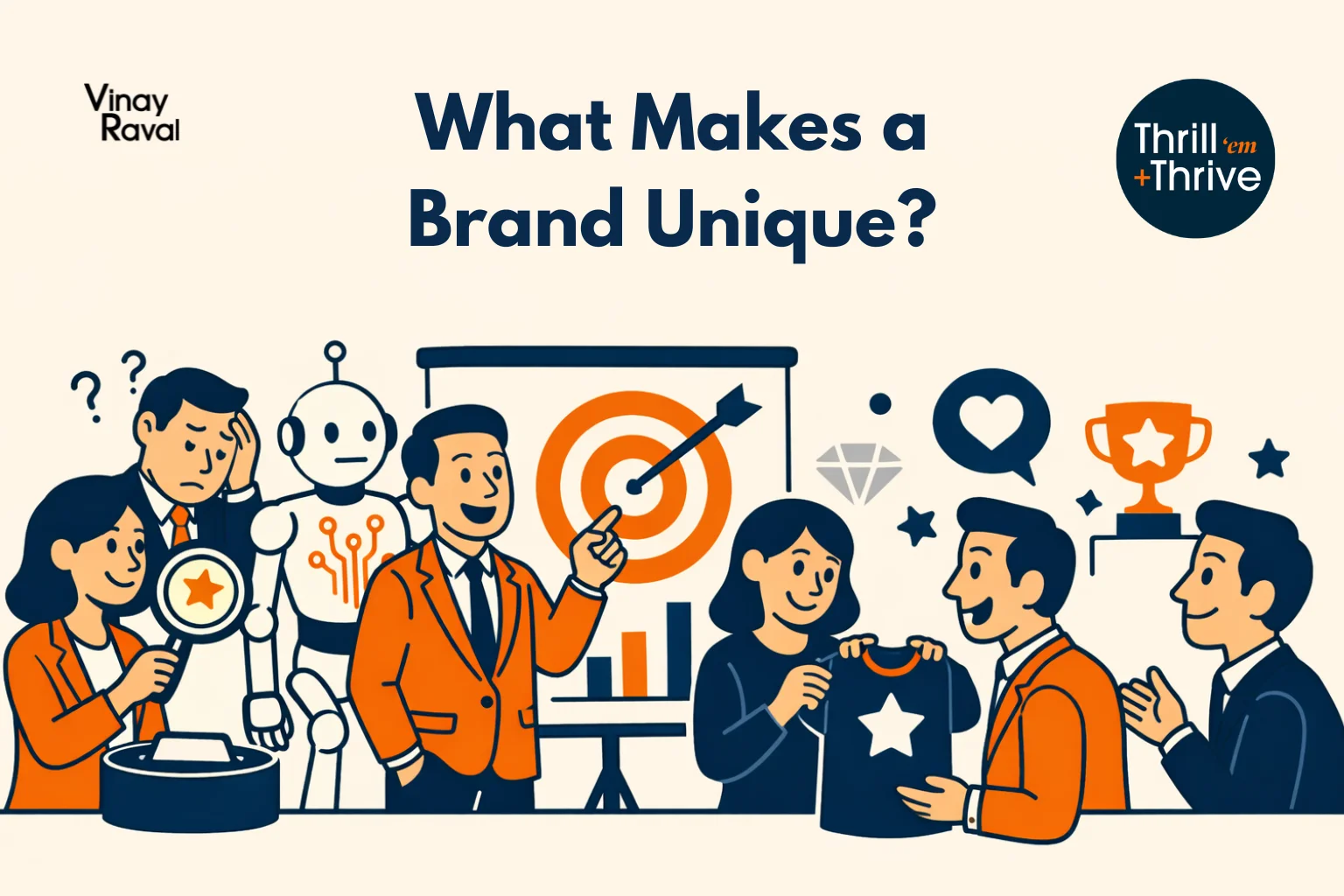
Standing out today isn’t about shouting louder; it’s about being clearer, more intentional, and more aligned. True uniqueness comes from a handful of strategic elements working together in harmony, shaping how people see you, trust you, and choose you over someone else.
Clear Purpose
A brand without a clear purpose is like a ship without a compass; it drifts wherever the market winds blow. Clear purpose answers a simple but powerful question: why do you exist beyond making money? When that purpose drives decisions, partnerships, and product development, customers feel it, and it becomes hard to replicate.
Distinct Positioning
Distinct positioning means you choose the space you want to own instead of fighting for scraps in someone else’s. Strong brand positioning clarifies who you’re for, what you solve, and why that matters in a way competitors don’t. When you define your category or carve out a niche within it, you stop competing broadly and start leading specifically.
Compelling Value Proposition
A compelling value proposition goes beyond features and dives into outcomes. It answers: What transformation do customers experience because of you? When that promise is specific, believable, and aligned with real needs, it becomes a magnet rather than just another marketing line.
Consistent Experience
Consistency builds familiarity, and familiarity builds trust. Your brand experience isn’t just your product; it’s the website, the follow-up email, the tone in your customer service replies, and the feeling someone gets after interacting with you. When every touchpoint feels cohesive, people begin to associate that consistency with reliability.
Emotional Connection
People don’t buy logic; they justify with logic. Emotional connection is what makes someone say, “This just feels right.” Whether it’s confidence, belonging, safety, or inspiration, brands that consistently trigger meaningful emotions become memorable long after the transaction ends.
RELATED: 7 Emotional Drivers of Purchasing Decisions
Why Distinction Drives Growth

Growth doesn’t come from being slightly better; it comes from being meaningfully different. When customers can clearly articulate why you’re not like the others, they stop comparing you line by line and start choosing you with conviction. That shift, from comparison to preference, is where momentum lives.
Distinct brands also build equity over time. Their distinctive brand assets, such as visual cues, tone, and recurring themes, become mental shortcuts in customers’ minds. Instead of having to reintroduce themselves every time, they’re instantly recognizable, lowering acquisition costs and strengthening loyalty.
Brand Differentiation vs. Imitation
In crowded markets, the line between standing out and blending in often comes down to intention. The contrast becomes clear when you examine how brands define their purpose, deliver value, tell their story, and choose to innovate.
Original Purpose vs. Trend Chasing
Brands grounded in original purpose make decisions based on why they exist, not on what’s currently popular. When purpose leads, strategy feels cohesive and long-term rather than reactive and scattered. Trend chasing, on the other hand, often creates inconsistency because the brand keeps reshaping itself to keep up with external noise. Over time, that erodes clarity and makes it harder for customers to understand what the brand truly stands for.
Unique Value vs. Price Wars
When a business competes primarily on price, it signals that its offer is interchangeable with others. Customers learn to compare numbers rather than meaning, which drives margins down and loyalty along with it. A focus on unique value shifts the conversation from cost to outcome, emphasizing the transformation or benefit that only that brand delivers. Brands that clearly articulate and consistently deliver distinct value reduce the need to discount because customers see the difference as worth paying for.
Authentic Story vs. Buzzwords
Generic claims about “innovation,” “quality,” or “excellence” rarely leave a lasting impression because they lack depth and evidence. Authentic brand narratives, rooted in real experiences and aligned with action, resonate more strongly and build credibility over time. Effective brand storytelling centers on purpose, values, and the customer’s journey rather than empty slogans. When words match behavior, trust compounds; when they don’t, skepticism grows.
Innovation vs. Replication
Replication copies visible tactics, but it rarely captures the underlying strategy that made them effective in the first place. Innovation requires understanding market gaps, unmet needs, and customer frustrations, then designing new solutions around them. Brands that innovate think beyond surface-level features and reconsider models, experiences, and delivery systems. That deeper reinvention creates advantages competitors cannot easily duplicate.
How to Find the Reason Why Customers Choose You

If you want to understand why people choose you, you have to stop guessing and start observing. Most businesses assume customers buy because of price or convenience, but the real drivers are often emotional, relational, or experiential. The key is to step outside your own assumptions and look at your business through the eyes of your target audience. When you understand customer perceptions and experiences, patterns begin to emerge.
Start by digging into three practical areas:
Review Patterns: Look for repeated phrases in testimonials and feedback that reveal what customers truly value.
Buying Behavior: Notice which products, services, or upgrades customers keep coming back to.
Emotional Language: Pay attention to words that describe feelings (e.g., relieved, confident, understood, etc.) because emotion signals real differentiation.
When you connect these insights, you’ll often discover that customers are choosing you for reasons deeper than features alone. Lean into those strengths intentionally, and you turn an accidental advantage into a strategic one.
Practical Tips to Differentiate Your Brand
Differentiation doesn’t happen by accident; it’s the result of disciplined decisions and consistent execution. The way you refine what you offer, connect emotionally, show up repeatedly, and exploit overlooked opportunities determines whether you blend in or break away.
Strengthen Your Core Offer
Before adding more features or chasing the next big idea, tighten up what you already do best. A strong, focused core offer builds credibility and clarity, making it easier for customers to understand why you’re worth choosing. When your foundation is refined and reliable, everything built on top of it feels intentional rather than scattered.
Build Emotional Connection
Logic may open the door, but emotion is what keeps people inside. When your brand personality is clear, whether bold, reassuring, playful, or refined, it gives customers something to relate to on a human level. That emotional alignment creates loyalty because people feel understood, not just sold to.
Be Consistently Visible
Visibility is powerful, but only when it’s consistent. Your brand messaging should reinforce the same core ideas across every platform, from social media to sales calls, so your audience hears a unified voice instead of mixed signals. Repetition with clarity builds recognition, and recognition builds trust.
Leverage Competitor Gaps
Instead of obsessing over what competitors are doing well, pay attention to what they’re ignoring. Markets are full of unmet needs, underserved niches, and overlooked frustrations that present real opportunities. When you design your strategy around those gaps, you position yourself as the obvious alternative rather than just another option.
Win Hearts (and Markets) with Thrill ’Em + Thrive

Standing out in crowded markets isn’t about gimmicks; it’s about building a system that consistently delivers meaning, emotion, and clarity. Thrill ’Em + Thrive was designed to help solopreneurs stop guessing and start building strategically, combining human connection with practical business structure. Instead of chasing trends or copying competitors, this approach strengthens your brand identity from the inside out, making it difficult to replicate. When your strategy is rooted in empathy and executed with intention, growth becomes sustainable rather than sporadic.
Here’s how Thrill ’Em + Thrive turns differentiation into action:
Clarify Your Core Message: You define exactly what you stand for and who you serve. This removes confusion from your marketing and makes every decision sharper and more aligned.
Design Memorable Customer Moments: You intentionally craft customer experiences that activate emotion rather than relying on surface-level tactics. These moments build loyalty because customers feel seen and valued.
Align Strategy With Daily Execution: You translate big-picture ideas into repeatable systems that protect consistency. This ensures your promises are delivered reliably, not just when it’s convenient.
When you apply this framework, you move beyond theory and into disciplined growth. Thrill ’Em + Thrive helps you create a business that doesn’t just compete, it resonates, connects, and wins.
Final Thoughts on Making Your Brand Stand Out
If you remember nothing else, remember this: uniqueness isn’t decoration; it’s alignment. When clear purpose, distinct positioning, meaningful value, consistent experience, and emotional connection work together, they create brands that last. When you stop chasing trends and start strengthening your foundation, you naturally rise above the noise.
Ready to build a brand that doesn’t just compete but commands attention? Join the course and start transforming your business with structured, human-first growth coaching today.
FAQs About Brand Uniqueness
How do I identify my brand's unique value proposition (UVP)?
Your UVP becomes clear when you connect your strongest capability with a specific customer outcome that competitors don’t deliver as effectively.
How does a brand story contribute to uniqueness?
A brand story shapes emotional meaning around your business, helping customers remember not just what you do but why it matters.
What’s the best first step I should take today?
Start by clarifying your purpose and defining who you’re not for, because focus is the foundation of distinction.