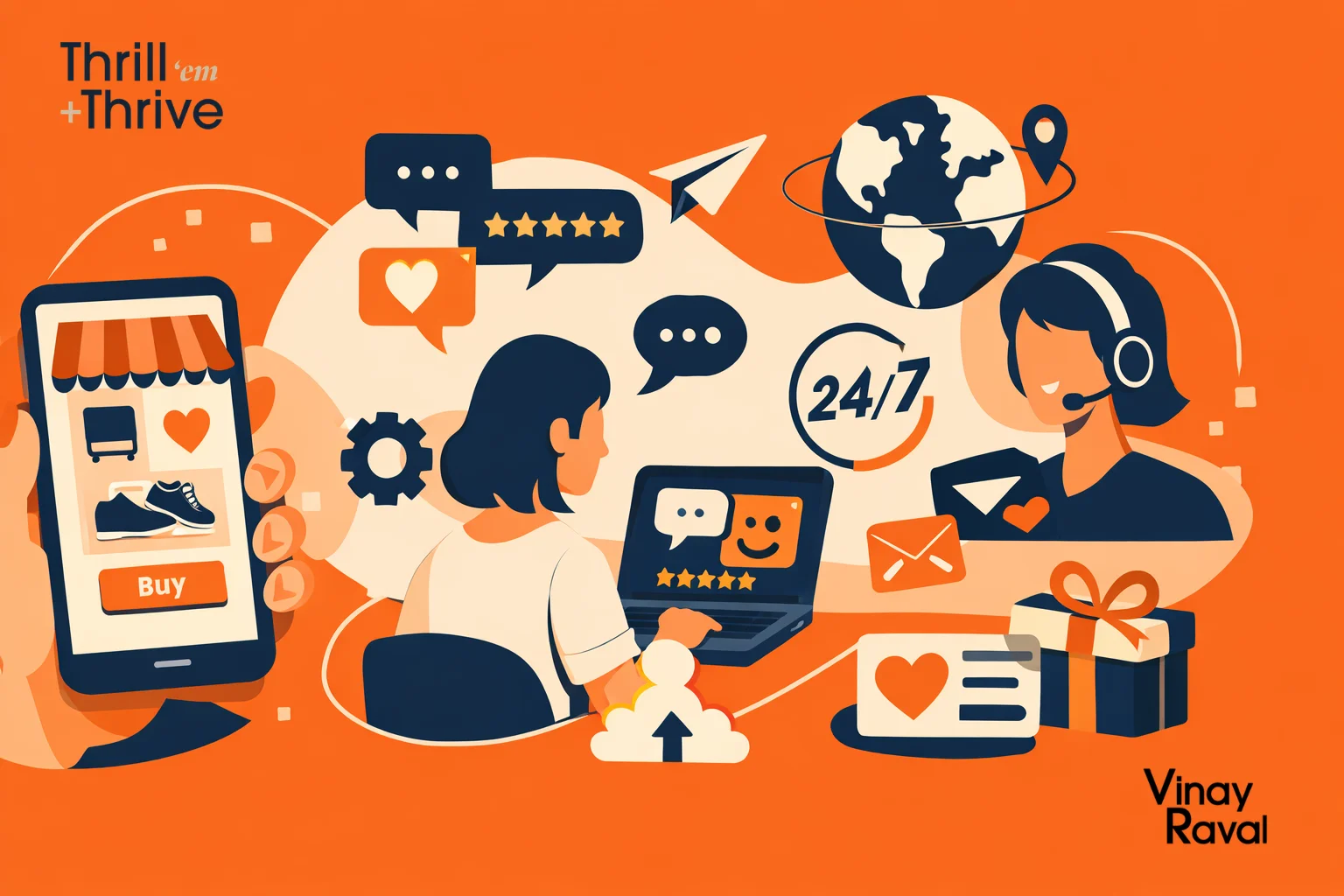
Customer experience isn’t just important anymore; it’s everything. Around 75% of customers use multiple channels in a single transaction, and over half expect personalized interactions along the way. People aren’t just going online to buy; they’re there to connect, explore, and build relationships with brands.
Customers remember the details: how easy your site was to navigate, how fast you responded, how smooth checkout felt, and whether your follow-up felt human or robotic. That’s the difference between a one-time purchase and a loyal fan, and that’s why optimizing customer experience isn’t optional if you want to grow.
This is where digitizing customer experience stops being a tech upgrade and starts becoming a loyalty strategy. In this post, you’ll see why it matters and how to do it in a way that actually feels good for your customers (and your brand).
Digitizing Customer Experience: What It Really Means
So, what is digital customer experience? It’s the vibe people get from every interaction they have with your business online: your website, emails, DMs, onboarding, checkout, support, content, and even those little confirmation messages.
Before you try to “digitize” anything, you’ve got to understand what that experience actually feels like. Because every click, scroll, and message creates an impression. Digitizing customer experience is simply choosing to design those moments on purpose, so they feel smooth, thoughtful, and human, instead of leaving them up to chance.
The Benefits of Digitizing Customer Experiences
A few years ago, people had patience. Now? Not so much.
Today’s expectations are shaped by brands that feel effortless: smooth interfaces, personalized messages, and zero friction. People want things fast, clear, and relevant, and they want to feel understood while getting it. That’s why digitizing customer experience isn’t a “nice-to-have” anymore; it’s a must.
If your digital presence feels clunky or like an afterthought, loyalty disappears fast. Attention spans are short, and switching is ridiculously easy. Customers can leave in seconds. What keeps them around isn’t just a great product; it’s how easy and good the experience feels, and the sense of connection they get from being part of your world.
Here’s how both you and your customers will benefit:
Increased Conversions
When the experience is smooth, clear, and friction-free, people naturally move forward. They don’t second-guess, hesitate, or get stuck trying to figure things out—they just take action. A digital customer experience strategy removes the tiny moments of confusion that quietly kill conversions, such as unclear next steps or clunky checkout flows. When everything feels intuitive and tailored, customers are far more likely to say “yes” without overthinking it.
Greater Customer Loyalty
Loyalty isn’t built on one good interaction—it’s built on consistently great ones. When customers feel understood across every touchpoint, from your emails to your support to your follow-ups, it creates trust. Digitizing customer experience helps you show up in a way that feels personal and reliable, not random or disconnected. And when people trust you and enjoy the experience, they stick around—and bring others with them.
Scalable Growth
The beauty of a well-digitized experience is that it works just as well for 10 customers as it does for 10,000. With the right systems in place, you can deliver consistent, high-quality experiences without burning out or dropping the ball. Automation, data, and smart tools handle the heavy lifting, while you focus on refining the experience and adding human touches where it matters most. That’s how you grow without sacrificing quality or your sanity.
How to Strategically Approach Digitizing Customer Experience

Most entrepreneurs don’t struggle because they lack effort; they struggle because they jump straight into tools. New software, automations, chat widgets, all added without asking one simple question: what experience are we actually trying to create?
Digitizing customer experience doesn’t start with platforms. It starts with people.
Define Customer Personas
Before you touch a single tool, get crystal clear on who you’re actually serving. Not just surface-level demographics, but what they care about, what stresses them out, what excites them, and what they’re really trying to achieve. This is where digitizing customer experience becomes human again.
Start by digging into:
Their goals and motivations
Their frustrations and pain points
Their buying triggers and hesitations
Then go one layer deeper. What’s their emotional state when they find you? Are they overwhelmed, curious, skeptical, or ready to act? The more you understand this, the easier it becomes to meet them exactly where they are.
When you get this right, everything sharpens. Your messaging feels more natural, your offers hit harder, and your experience actually resonates. Instead of guessing, you’re designing with intention, and that’s when customers start thinking, “this feels like it was made for me.”
Map Customer Journey
Once you know your people, map out how they move, from that first impression all the way to post-purchase reflection. This is where you start spotting friction, confusion, and missed opportunities hiding in plain sight.
Ask yourself:
Where do they first discover you?
What questions come up immediately?
Where do they hesitate or drop off?
Don’t just map actions; map feelings. Where are they excited? Where are they unsure? Where are they about to bounce? These moments are gold because they show you exactly where your experience needs work.
Digitizing customer experience means smoothing out those rough edges. You’re not just moving people forward, you’re guiding them with clarity and confidence. When the journey flows, it feels effortless. And when it feels effortless, trust builds. That’s when conversions start happening naturally.
Build Omnichannel Experience
Your customer community doesn’t exist in one channel, and your experience shouldn’t either. They might discover you on social media, check out your website, ask a question in a chat, and come back later via email or mobile.
The goal is consistency across:
Messaging and tone
Customer data and history
Overall experience and expectations
Everything should feel connected. If someone starts a conversation on one channel, they shouldn’t feel like a stranger on the next. No repeating themselves. No starting from scratch.
When done right, it feels like one smooth, continuous experience that adapts to them. That’s what a strong digitizing customer experience looks like: less “systems” and more “this brand just gets me.”
Leverage Data and AI
Now you bring in the tech, but with purpose. Data and AI aren’t here to replace the human touch; they’re here to enhance it and make it scalable.
Use them to:
Personalize content and offers
Automate repetitive tasks
Identify patterns and opportunities
The key is to use data to understand, not just to measure. What are people clicking on? Where are they dropping off? What keeps them engaged? These insights help you make smarter decisions that actually improve the experience.
The magic happens when data meets empathy. You’re not just tracking clicks, you’re understanding behavior. You’re not just automating, you’re anticipating needs. That’s how digitizing customer experience becomes both intelligent and genuinely helpful.
RELATED: How Human Strategy Powers AI for Business Development
Optimize and Iterate
This isn’t a one-and-done process. Customer expectations evolve, behaviors shift, and new tools and opportunities pop up all the time. The best experiences are the ones that keep improving.
Focus on:
Testing small improvements regularly
Gathering real customer feedback
Refining what’s working (and fixing what’s not)
Pay attention to both the numbers and the nuance. Metrics will tell you what’s happening, but feedback will tell you why. That combination is where real growth happens.
Digitizing customer experience is a living system. The more you listen, learn, and tweak, the stronger it gets. Stay curious, stay flexible, and keep building something your customers actually enjoy interacting with.
How to Measure Digital Customer Experience to Optimize Your Strategy

Step 1: Define What You Want to Measure
The first thing you need to do in any business plan is set up SMART objectives with clear KPI’s for every stage. Why? This is exactly your reference point for measuring whether your strategy is successful. Break your digital experience strategy into stages:
Awareness
Engagement
Conversion
Onboarding
Retention
Support
Then think about what you would like to achieve from every stage and what you would want your customers to do at the end of each.
Step 2: Track Core Behavioral Metrics
If you don’t measure it, you’re guessing. Start with quantitative data to uncover behavioral patterns, some examples of which are:
Conversion rates: Are visitors becoming customers?
Bounce rates: Are people leaving immediately?
Session duration: Are they engaging with your content?
Repeat purchase frequency: Are they coming back?
These metrics illustrate how data can help answer key questions you’ll later use to optimize your strategy. Together, they reveal where friction occurs and where the customer experience flows smoothly. When conversion drops, or bounce rates rise, something in the experience likely needs refinement.
Step 3: Collect Direct Customer Feedback
Numbers tell you what is happening, and feedback tells you why. It’s important to hear and listen to what your customers are saying about their experience. Not only is it important to measure the success of your strategy, but it is also important to make your customers feel heard by your brand. So you can gather qualitative signals through:
Post-purchase surveys
Testimonials
Direct messages
Customer support inquiries
These reveal emotional reactions behind the data. If customers repeatedly mention confusion, frustration, or delight, that’s insight you can’t ignore.
Step 4: Identify Friction Points
Look for patterns that signal misalignment:
Frequent checkout abandonment → Something feels unclear or risky.
Repeated onboarding questions → Instructions need simplification.
Rising support tickets → A breakdown in communication somewhere.
Digitizing customer experience means continuously adjusting based on these signals. Every friction point is an opportunity to simplify to drive more results.
Step 5: Refine, Test, and Repeat
This isn’t a “set it and forget it” situation. The best customer experiences are constantly evolving.
As you collect more data and feedback, new insights will pop up. New ideas will emerge. And your strategy needs to keep up.
Focus on:
Reviewing your data regularly
Testing small, intentional changes
Monitoring what actually improves results
Then do it all over again. The businesses that win in the long term aren’t the ones who get it perfect once; they’re the ones who stay curious, keep listening, and keep improving.
Master Digitizing Customer Experience the Human-First Way With Thrill ’Em + Thrive
Thrill ’Em + Thrive is built on a simple truth: when you put humans first, your business grows naturally. Digitizing the customer experience is about putting your customers' needs first by designing every digital touchpoint around what they actually think, feel, and need. When customers feel understood, technology becomes an amplifier of trust.
The Thrill ’Em + Thrive framework helps you spot opportunities you’re currently missing, strengthen your business plan, and create a strategy that resonates psychologically with the people you want to serve. It also gives you tools to refine your positioning, improve your service delivery, and build a business that feels joyful rather than overwhelming. This business strategy course isn’t just about tactics; it’s about building experiences that make people fall in love with what you do.
Final Thoughts on Enhancing Digital Customer Experiences
Digitizing customer experience isn’t about adding more technology. It’s about designing digital journeys that feel effortless, aligned, and genuinely human. When you get that balance right, growth becomes a natural outcome of trust. This is ultimately the long-term impact of intentionally digitizing the customer experience.
If you’re ready to build a business where customers feel thrilled at a human level, and your systems support that feeling digitally, it’s time to go deeper. Enroll today and start building a business people genuinely want to experience.
Thrill your customers, thrive digitally, and build loyalty that actually lasts.
Popular posts

Feb 13, 2026

Business strategy doesn't have to be boring! Your business has the power to spread joy and change the world! Let's unleash your potential - we got this!